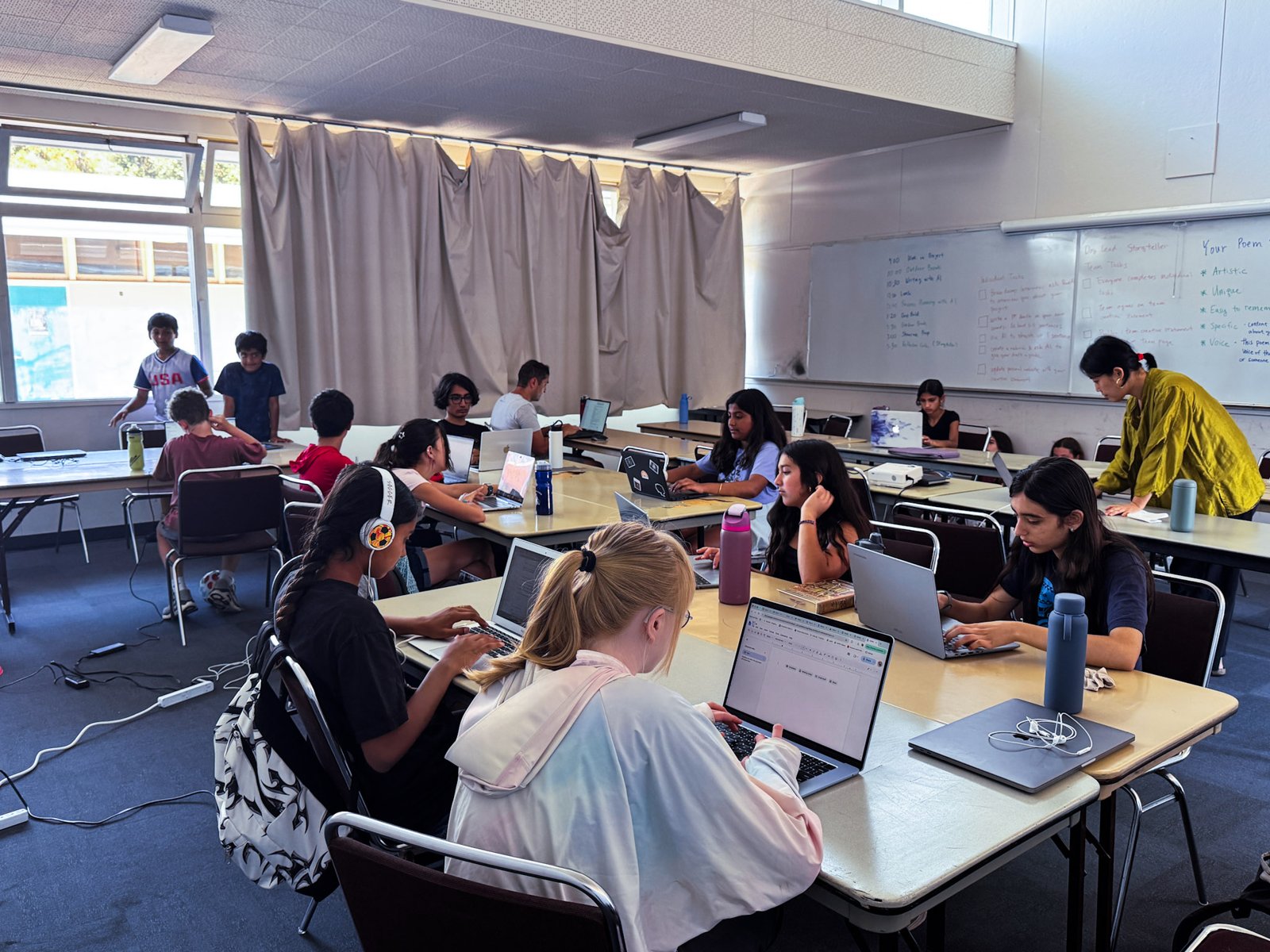
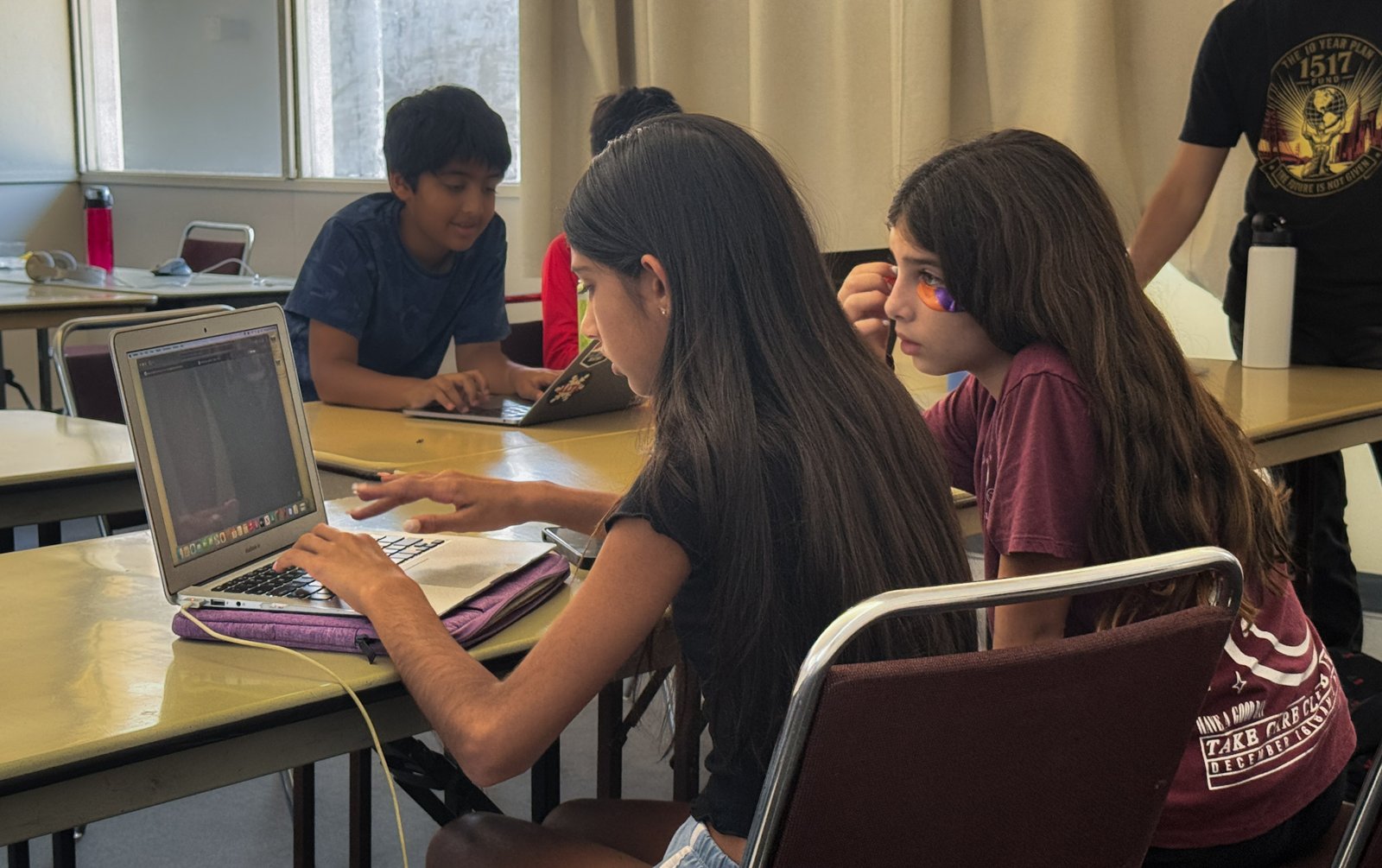
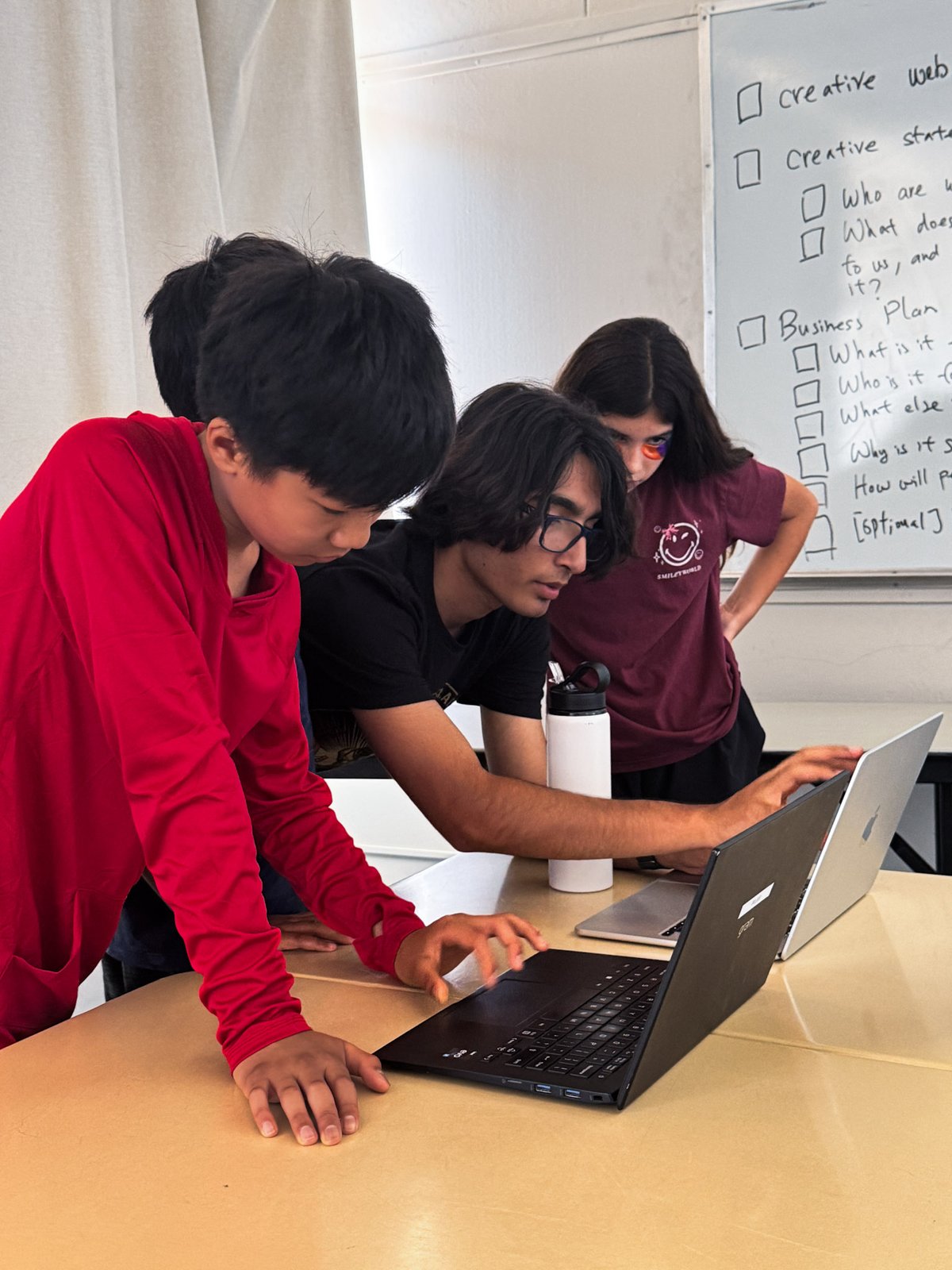
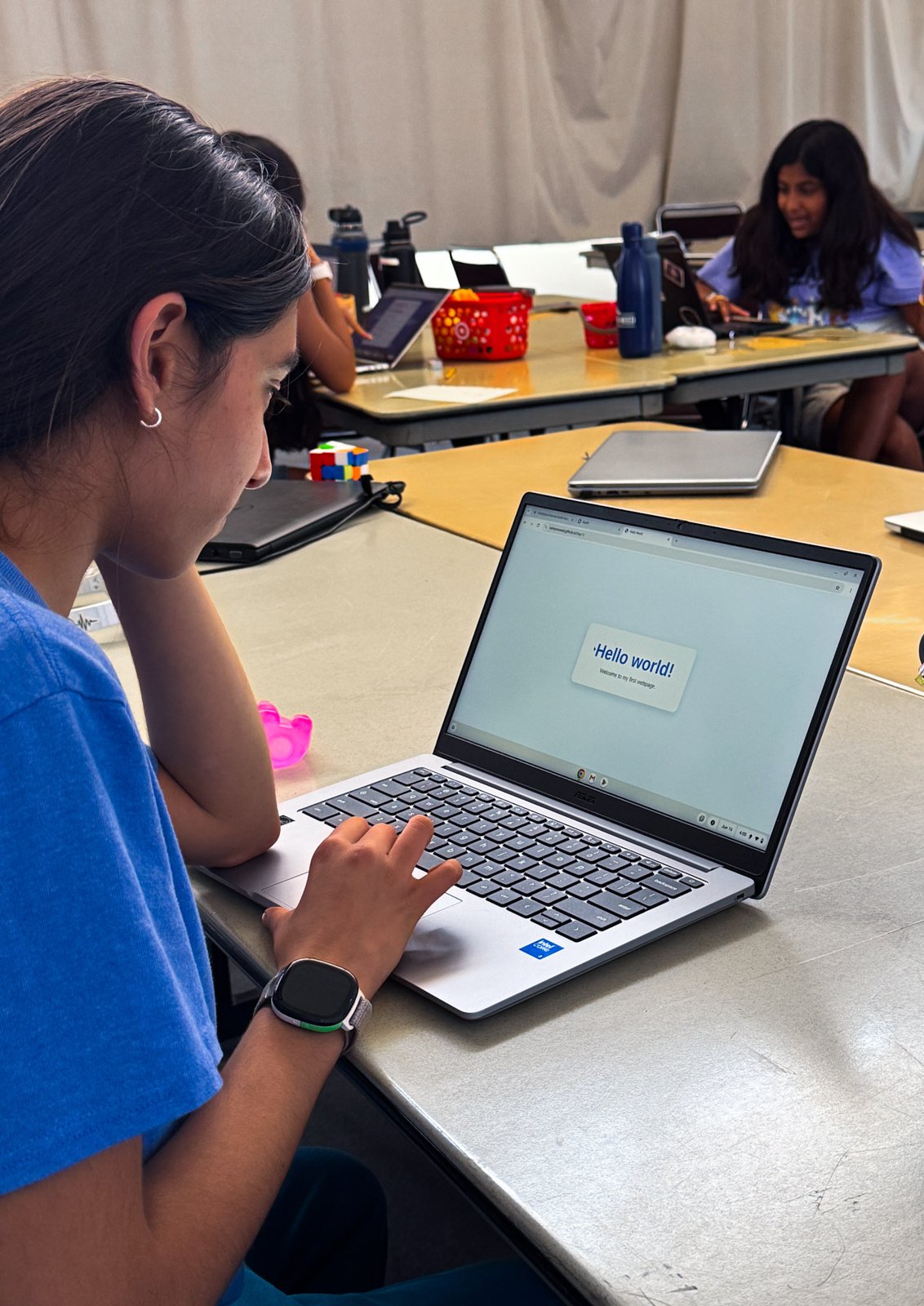
Last week, I ran a summer camp for middle schoolers teaching them to build with AI.
I had no idea what to expect – would the kids revolt against extra schoolwork on their vacation? Was the curriculum too advanced? Would a group with zero AI or coding experience be able to build something worth presenting in just 1 week?
Instead, what happened was that the kids astonished me with their fearlessness, ambition, and capacity. They exceeded all my expectations and I realized that I’d capped their ceiling too low.
Here are a few moments from Camp that moved me and made me feel hopeful about the future of AI and humans.
I want to win, but only if I’ve earned it.
A recent survey from Pew shows that half of U.S. adults are more concerned than excited about AI’s growing role in daily life.
I saw some of this attitude reflected in the wariness that kids showed towards AI as well.
In a discussion about cheating, I asked campers what sort of AI usage they thought was acceptable versus not.
One camper worried, “I liked seeing my ideas come to life, but it makes me feel a little guilty because of how AI takes away from human artists.”
Guilt was a theme that came up several times. I could tell that some campers were also troubled by the question of credit. Did I do the work or did AI? What if my idea was inspired by something I saw somewhere else?
When will adults reward me for leveraging AI and when would I get in trouble for using it?
Someone reflected: “with AI I don’t feel accomplished because I feel like I didn’t really do any work. I was in a hurry and I just wanted to get the work finished. I asked AI to do a lot, but maybe next time I could get AI to tell me what to do step by step instead of doing it for me.”
“AI felt really satisfying,” another camper said. “I liked how you had to be really specific. It was fun to see how it turned out iteration after iteration.”
I think kids can feel when an AI interaction feels like real intellectual engagement versus a genie that grants all your wishes. They felt proud when they felt genuinely stretched, and uneasy when they felt like they took shortcuts.
Kids have no priors.
While it was clear that kids worry about the prospect of making ethical mistakes, they had none of the fear about making technical mistakes which hold adults back when they learn to use AI for the first time. As a result, kids built more ambitious projects, in less time.
On Day 2 of camp, I was surprised to see that someone had singlehandedly spent $20 in tokens without even touching the more expensive image and music generation features.
What was going on?
I realized one camper had set himself the ambitious project goal of building a fully functioning runner game. As an adult with a background in engineering, I would have set a goal of first building tic-tac-toe – after all, that was an assignment in my MIT Introduction to Computer Science class. To see an 11-year-old accomplish that in a week would have been impressive enough.
I didn’t think middle schoolers would want to code complicated projects beyond a simple website, so V1 of the Bud AI platform was just a chat interface. As an adult who’s been coding for 15 years, if I had to write code without an IDE or specialized coding agent interface, I would have scoped the project down to bare bones.
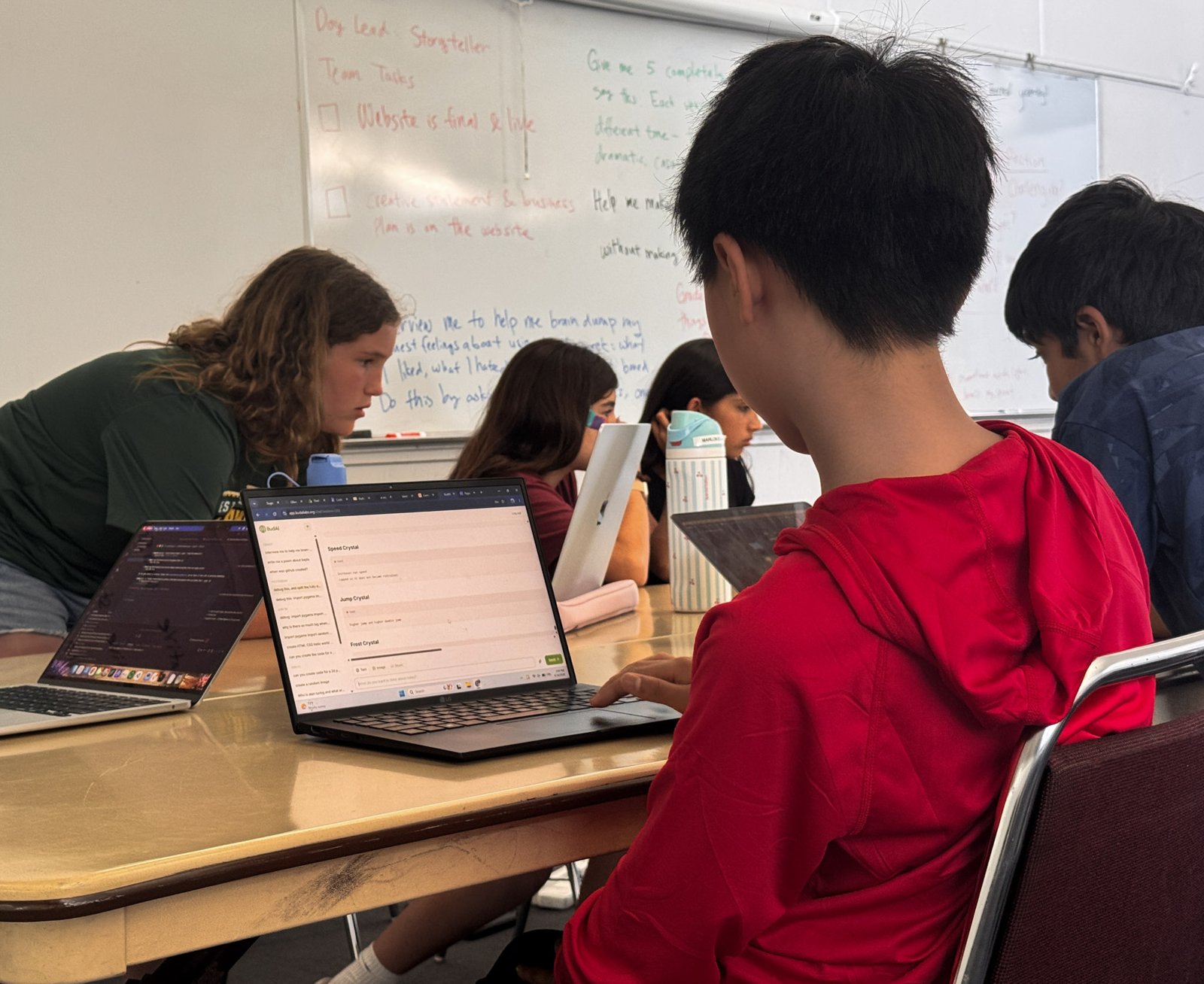
But kids have no priors about engineering process. This camper had no idea what an IDE was, but he knew what kind of game he wanted out in the world. So he painstakingly copy-pasted 2000+ lines of code into chat over and over again, and figured out how to version-control using Google Docs.
With enough tries (& tokens), it worked!
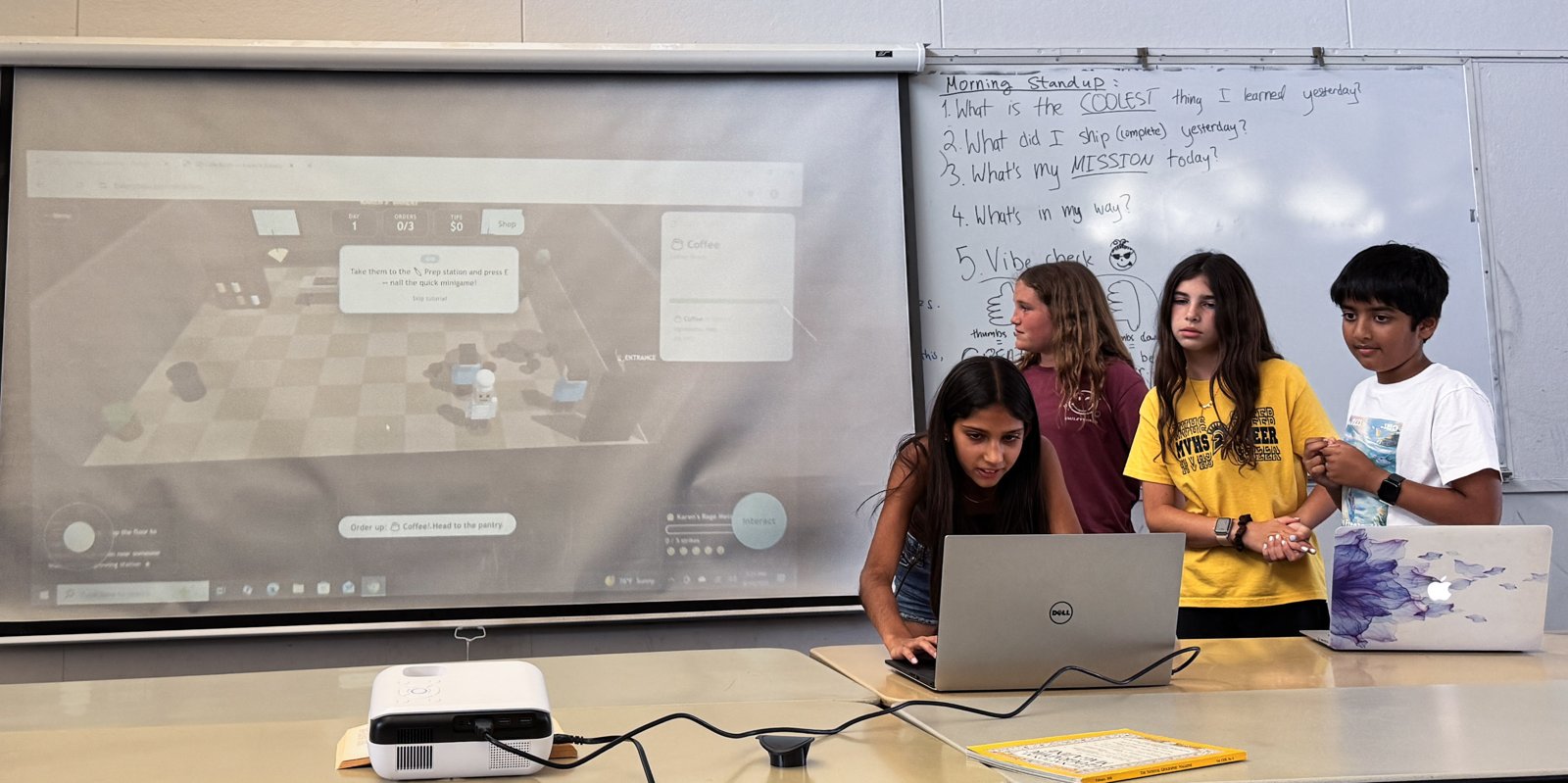
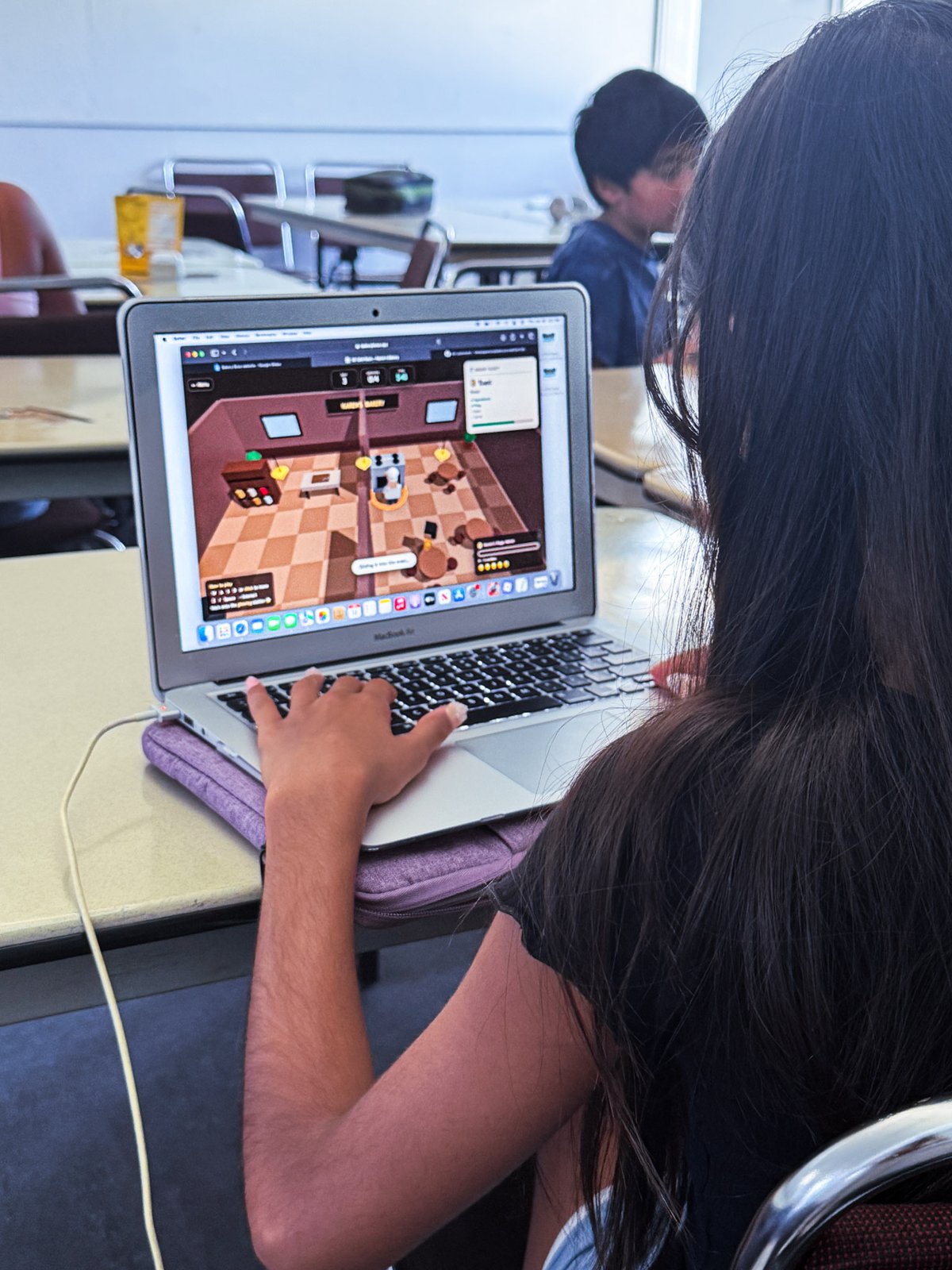
Several campers built fully functioning games that went viral during camp.
Entrepreneurs talk about the value of combining fearlessness, persistence, and joy. Most adults have trouble with these lessons.
A group of kids made me feel this viscerally.
Taste: what feels cringe and what feels like me.
The most contentious session was probably the one on AI Writing. When we tried out AI edits and style suggestions, campers hated all the options. “Eww, that sounds AI-generated,” they exclaimed “it’s cringe!”
But everyone loved using AI as an interviewer to brain-dump their own ideas and feelings. (It helped that our in-class demo was “help me brain-dump my ideas about why my Mom should give me more screentime.”)
For an assignment to write a poem about a friend, everyone turned in a different style. One poem was sarcastic & witty, like its author. Someone turned in a haiku. The poem’s subjects laughed “yes, that’s totally me!”
It was obvious to me that kids have a natural ability to express their personal taste using AI.
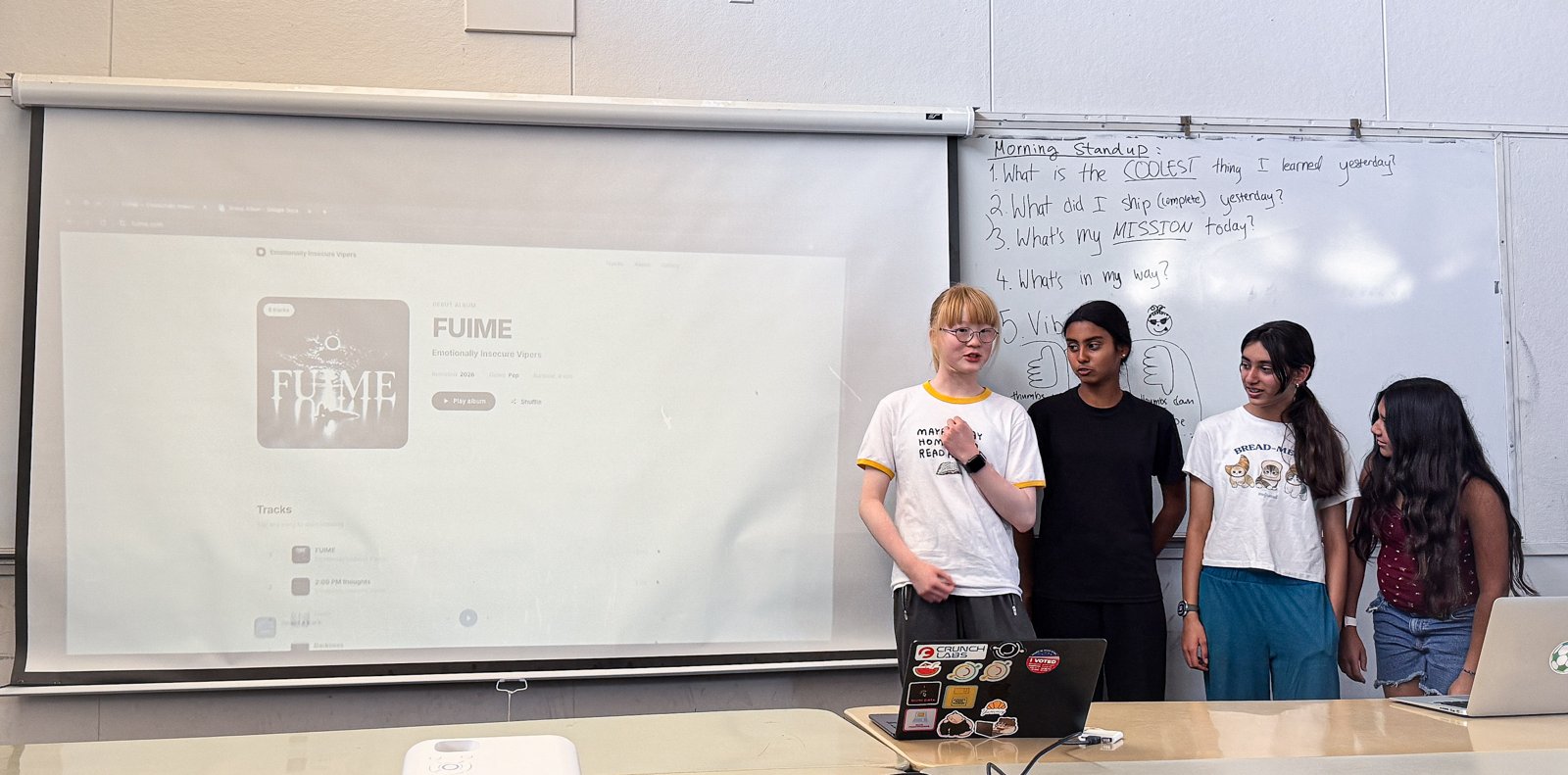
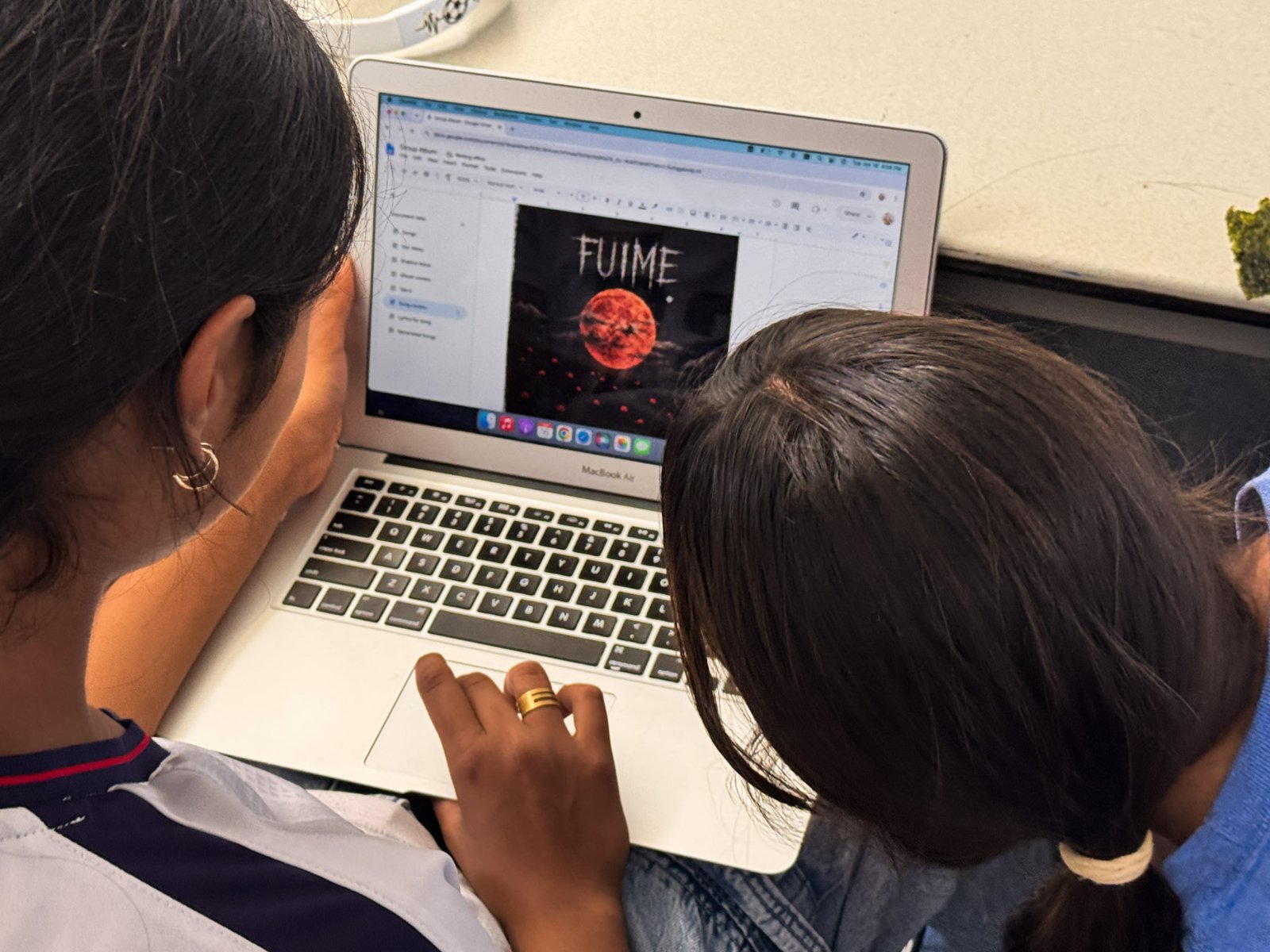
One team decided their project would be to create a full album from concept to art to music. One camper iterated on their title track, FUIME, over and over again. Here are some of her lyrics:
I was quiet, now I’m new
Step into something true
I used to hide behind the crowd
Keep my dreams from getting loud
But there’s a rhythm in my chest
Telling me to do my best
Every doubt that followed me
Turned into a melody
Now I’m walking through the glow
Finding magic as I go
One step, two steps
I’m not scared to try
Heart bright, eyes wide
Reaching for the sky
I’m in the FUIME, FUIME, FUIME
Dancing through the silver light, FUIME, FUIME
Watch me glow into the night
If the clouds come rolling through
I know what my spark can do
I’m in the FUIME, FUIME.
(Lyrics copyrighted by Charlotte Wang. You can listen to her full song here.)
This is a truly AI-native generation. I think that the age of AI will greatly reward 2 skills: (1) how to “just ask” for things and (2) knowing exactly what you want.
After this week, I feel hopeful that kids will have these skills in abundance.
References
[1] Pew Research Center (2026).[1] Pew Research Center (2026). Key findings about how Americans view artificial intelligence. Available at: https://www.pewresearch.org/short-reads/2026/03/12/key-findings-about-how-americans-view-artificial-intelligence/